
Huntsville City Directory Holdings
The official Texas State Library and Archives Commission, often called TSLAC, names only two Huntsville directory years in its holding list: 1975 and 1990. That is a verified pair of dated snapshots, not evidence of a continuous local run. TSLAC keeps its Texas directory collection in print and microform at the Austin Reading Room. Its guidance says patrons use the material on site, and staff do not search or transcribe volumes by phone or email. The Huntsville library, Walker County Genealogical Society, and Huntsville university archives add strong related collections, but their online descriptions do not establish extra local directory years.
| Collection | Years | Where Held | Access |
|---|---|---|---|
| Huntsville city directories named by TSLAC | 1975, 1990 | TSLAC print and microform collection | On-site Reading Room; no phone search or transcription |
| HPL Genealogy Room reference collection | More than 6,000 resources; directory run not published online | Huntsville Public Library | Secure room, staff help, scanners and microfilm readers |
| Walker County Genealogical Society collection | More than 5,000 volumes and 50,000 digital images | Library and Portal to Texas History partner collection | Library, portal, and Society support |
| SHSU Walker County collections | Photographs 1907–1990; other collection dates vary | Newton Gresham Library Special Collections | Finding aid and repository request |
The TSLAC holding list is the source for the two confirmed Huntsville entries.
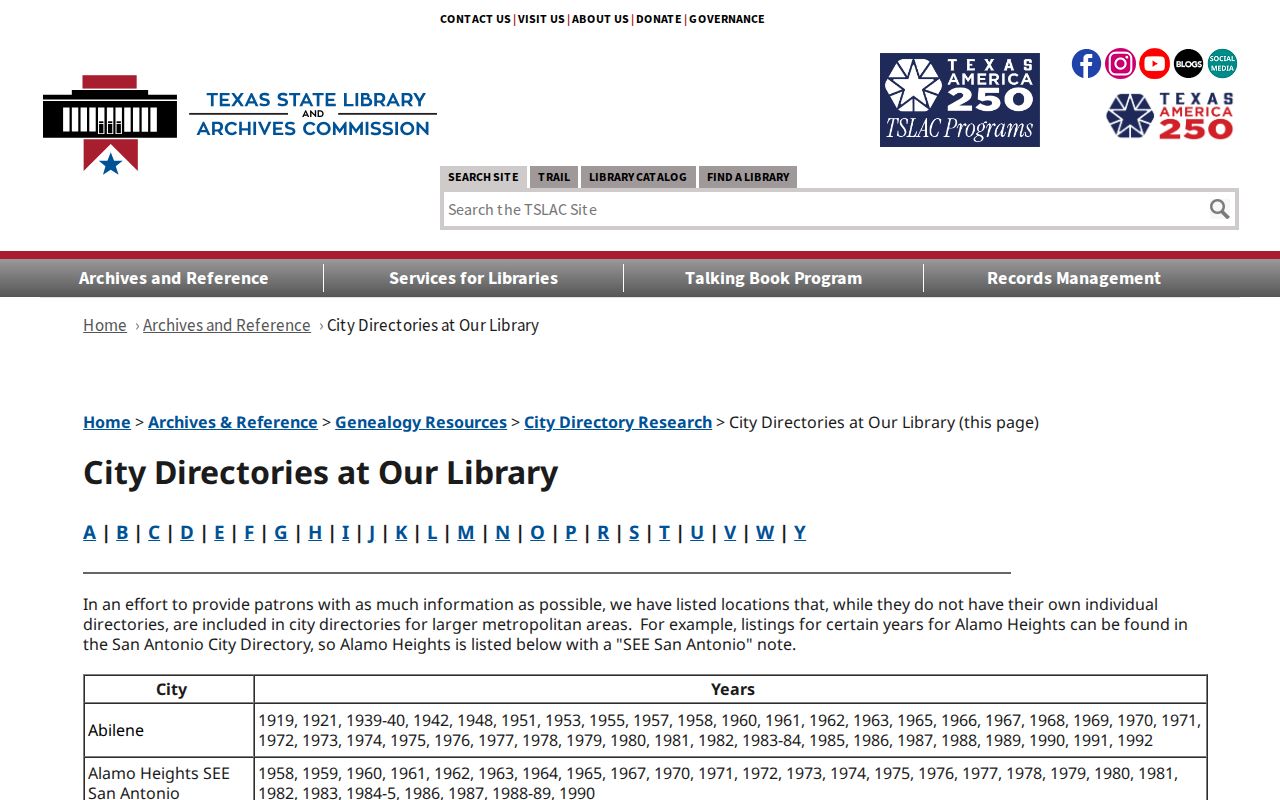
Use the listed years as fixed Huntsville checkpoints, then ask a Huntsville repository to check nearby Huntsville material rather than filling the years between them by assumption.
Huntsville Directory Years Confirmed
For the confirmed Huntsville volumes, the key fact is as much about what remains unconfirmed as what is named. The TSLAC list does not identify a publisher for 1975 or 1990, and the online research did not locate the exact shelf location, a first or last local printed year, or a surviving reverse section for either volume. A Huntsville researcher should record the title page, publisher, coverage statement, and any street section when examining the book. Those details belong to the volume itself, not to a guess based on a directory from another Texas city.
There is a useful warning for web searches. A digitized 1859 Williams’ Huntsville Directory is for Huntsville, Alabama, not Huntsville, Texas. It is not a substitute for a Walker County record. TSLAC points Huntsville researchers toward its Reading Room, the UNT digitized City Directories Collection, the UT Briscoe Center collection, library-access databases, WorldCat, and the Library of Congress. Those are routes to investigate, not proof that each route holds a particular local year.
Note: Write down the edition title and its actual coverage date before attaching any Huntsville address result to a Huntsville family timeline.
Huntsville Directory Room Access
The Johnnie Jo Sowell Dickenson Genealogy Room at Huntsville Public Library is the local starting point for a directory question that cannot be answered from an online list. The room holds more than 6,000 books, newspapers, microfilm, and computer-based resources, with attention to Walker County and Southern research. Seven computers are reserved for genealogy work. Its named databases include FamilySearch affiliate access, HeritageQuest, Ancestry Library Edition, American Ancestors, and Fold3. That mix makes the room practical for testing a dated Huntsville entry against census, newspaper, or military material.
The Huntsville Genealogy Room has a different routine from a public-stack visit. The library policy calls for a front-desk sign-in and keycard for the secure room. Researchers may bring notebooks, loose papers, pencils, or a billfold, while other belongings go in lockers. Microfilm readers and scanners support local-history work, and archive users may view up to three folders at a time. Toni Herrington’s posted research hours are Monday and Tuesday from 10 a.m. to 3 p.m. and Wednesday from 10 a.m. to 4 p.m.; general library hours are longer on most weekdays.
The Huntsville Public Library provides the local research access shown here.
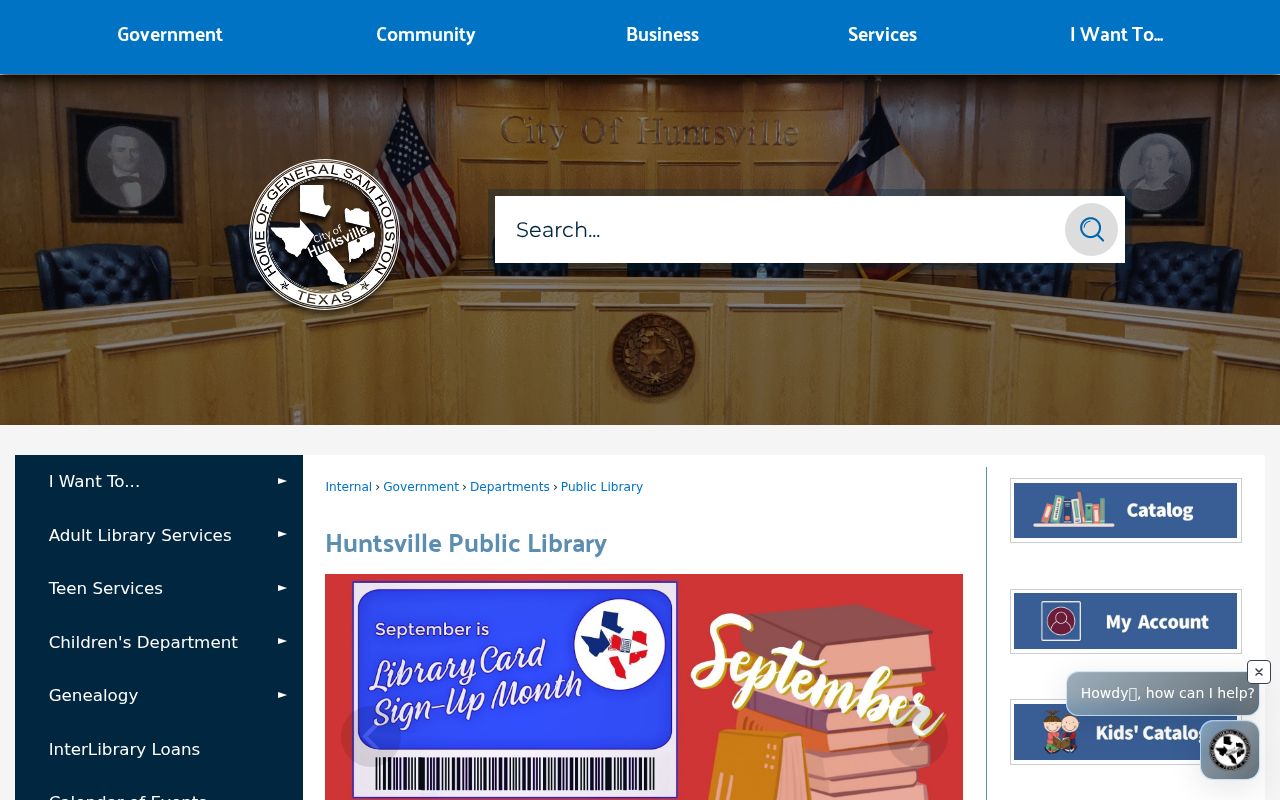
Bring the surname, the Huntsville street spelling, and known date range, then ask staff whether a local volume, newspaper reel, or vertical file can test the lead.
Huntsville City Directory Entries
No actual 1975 or 1990 Huntsville page was opened during the research, so the following is a field model from TSLAC’s city-directory guidance, not a reconstructed local entry. An alphabetical listing commonly supplies a name, address, telephone number, and spouse. Some editions add an occupation and an ownership or renter mark. Huntsville researchers should copy symbols exactly, including street abbreviations, because a mark that looks small can change whether a line refers to a residence, a business, a widow, or an address section. A city directory is a listing prepared for a particular edition, not a title record.
| Name line | Record the spelling, initials, suffix, and any spouse shown in parentheses. |
|---|---|
| Address | Copy the house number, street form, and unit or business wording exactly. |
| Telephone | Note whether an edition provides one; unlisted numbers may be absent. |
| Occupation | Some editions identify a trade or workplace connection. |
| Tenure notation | Some editions distinguish owner and renter marks; consult that volume’s key first. |
- Criss-cross directory
- An address-first section that may list a subscriber or occupant by street and number. Exact Huntsville years remain unconfirmed.
- Householder index
- An alphabetical arrangement centered on the household name, useful when the street form has changed.
- Abbreviation key
- The guide to the volume’s symbols and short forms. Photograph or transcribe it before interpreting individual listings.
A name in the alphabetical section and a Huntsville address in a reverse section may describe different things. Match the edition date and label each result as listed person, subscriber, occupant, business, or owner only when the source supports that label.
Huntsville Reverse Directory Gaps
A reverse or criss-cross city directory starts with a street number and name, then points to a listed occupant or telephone subscriber. It is valuable when a house is the starting point, but it is not a complete roll of everyone there. Unlisted numbers, students, recent movers, and households without telephones can disappear from that format. The exact Huntsville reverse-directory years were not located in the official online holdings. Ask Huntsville Public Library, Huntsville SHSU Special Collections, FamilySearch, or TSLAC to confirm a particular volume before treating it as a street-by-street source.
The Texas city-directory research guide also points Huntsville researchers to digitized and catalog routes that can help locate a volume. Read the street portion after the alphabetical listing, not instead of it. The two sections can reveal a move, a subscriber change, or a business use, but neither settles who held title to a Huntsville parcel.
Huntsville Archive Directory Companions
Huntsville directories become more useful when a local archive supplies the missing context. The Walker County Genealogical Society collection reports more than 5,000 bound volumes, over 50,000 digital images, vertical files, family histories, and local birth, death, cemetery, and marriage material. Huntsville library staff and Society volunteers maintain the collection. The Society and library also host Genealogy Weekend twice a year. The August 2025 program included a Genealogy Room orientation, individual research time, and sessions on African American, Native American, military, and family research.
The Society’s Portal to Texas History partner page documents the local collection.
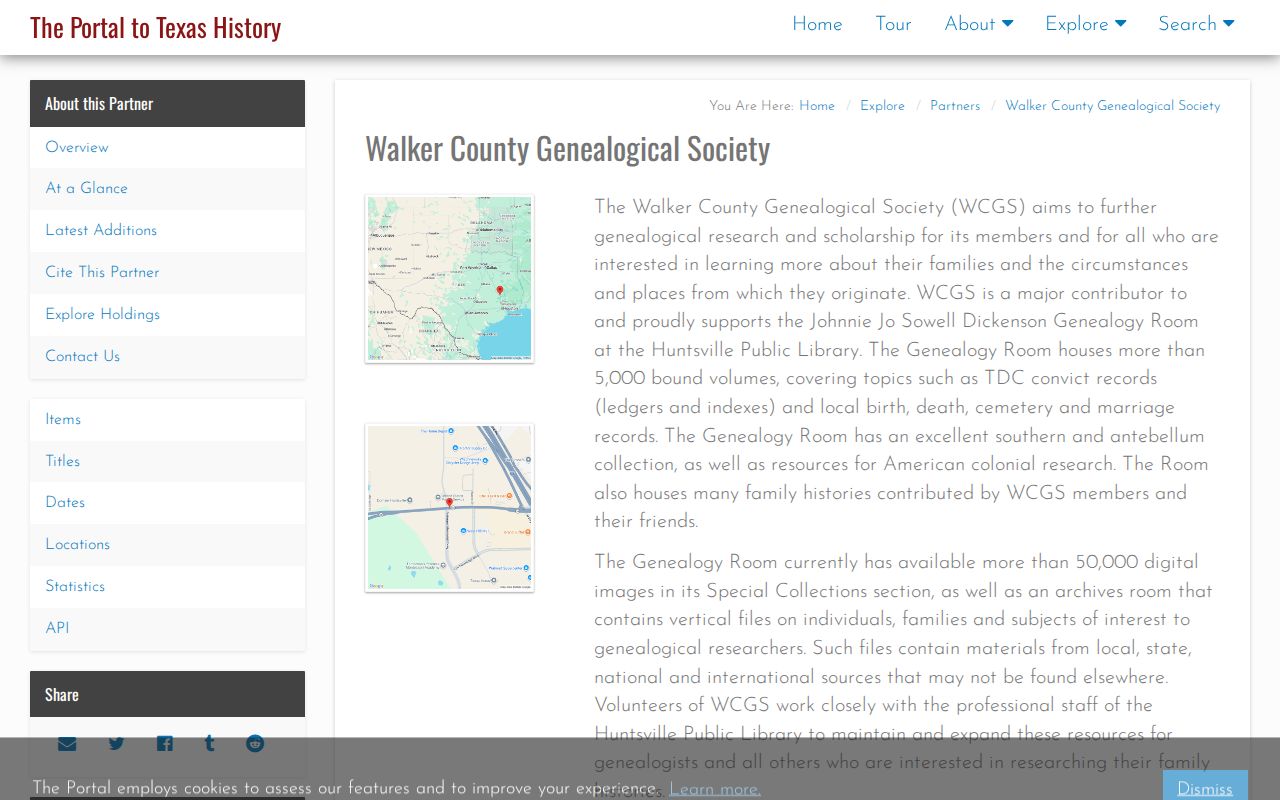
Vertical files and Huntsville local indexes can supply a surname, death notice, or cemetery lead that helps distinguish two people with the same directory name.
At Huntsville’s Sam Houston State University, the Walker County History Collection includes newspapers, brochures, speeches, maps, and local-history files, while other named finding aids cover cultural resources, family notes, and Huntsville photographs. Those collections can place a Huntsville address within a neighborhood or business history when the directory gives only a terse line.
The SHSU history collection finding aid is the source for this archive route.
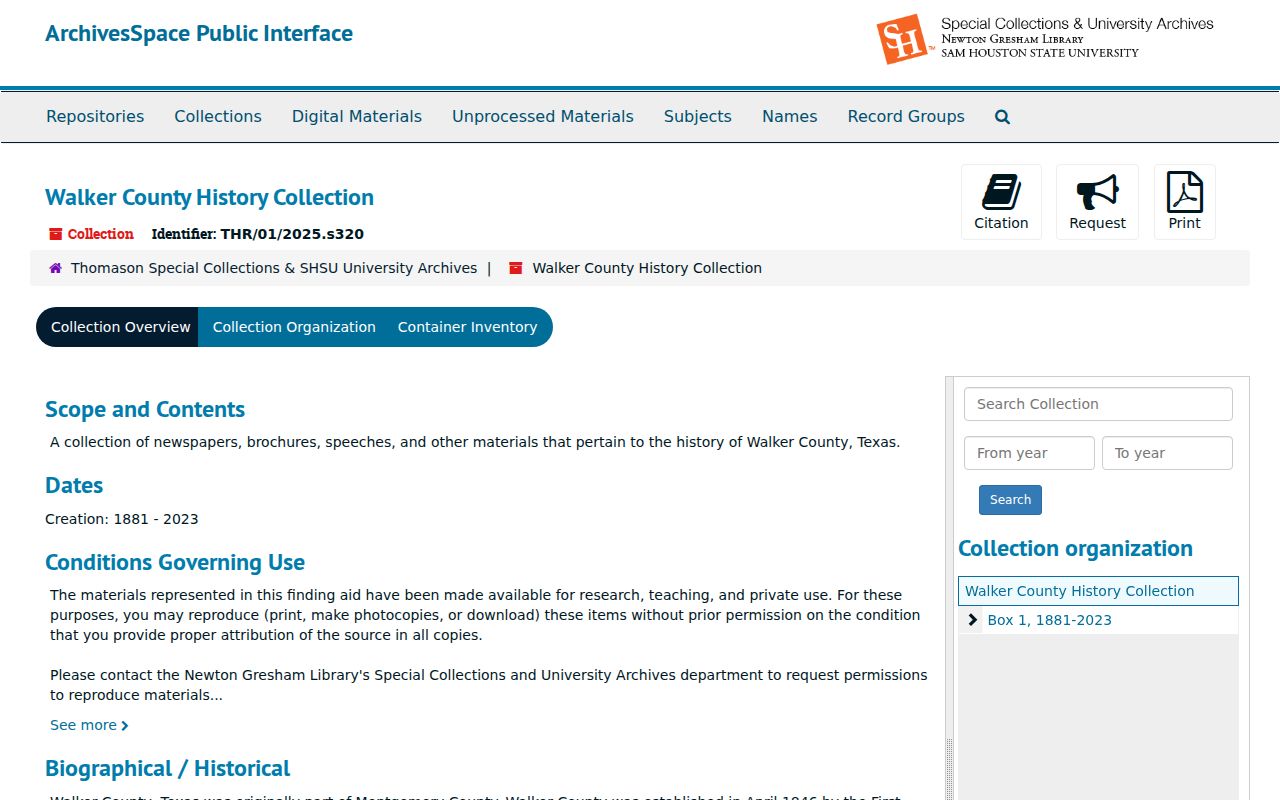
Use the finding aid and repository contact to request the relevant Huntsville folder or map rather than assuming every local paper has a searchable online index.
Huntsville City Directory Tracing
A Huntsville household trail works best as dated entries, not one uninterrupted story. Begin with the first confirmed directory appearance and preserve the name exactly as printed. Then use a census release, deed, tax roll, obituary, probate file, or cemetery record to test whether the person is the same individual. HeritageQuest at the Huntsville library provides federal census material through 1940, and the 1950 census is public under the federal 72-year release schedule. Later schedules open on that same schedule. Walker County scholastic census material offers another Huntsville local clue from 1928 to 1971, although its documented gaps matter.
- Find the person in a confirmed directory year and record the entire listing, including every abbreviation.
- Check the alphabetical and any verified reverse section, then label the result by what it actually says.
- Compare the address with the appropriate released federal census and note household names, ages, and relationships.
- Test a move or disappearance against a deed, tax roll, obituary notice, probate record, or cemetery record.
- Keep a dated row for each source and leave an unexplained gap open for later research.
Walker microfilm reaches much earlier than the confirmed Huntsville directory pair. Walker County deeds used in Huntsville research begin in 1846, tax rolls run from 1846 to 1910, and probate minutes begin in 1846. That chronology lets a Huntsville family researcher move from a later directory snapshot toward older county records without claiming that a directory itself proves ownership.
Huntsville Directory Record Limits
Huntsville city directories are clues about a dated listing, not proof of title, a complete household, or continuous residence. A directory may omit someone, use initials, preserve a married or maiden name, or reflect an address that changed form. If a result concerns a property’s ownership trail, use the Clerk’s deed index and parcel records alongside the listing. If the question concerns who lived at one address over time, the address-focused sequence belongs with the Huntsville past residents record trail.
The Huntsville local-history shelf has its own useful story. Walker County’s deed records begin in 1846, while the Historical Commission’s Gibbs-Powell Home became a county museum and archive under a 1984 lease. The Commission maintains Huntsville history and archive functions, and its museum can supply context for a Huntsville address or family that a small city-directory line cannot carry.
The Walker County Historical Commission describes the local history and museum resources.
Pair the Huntsville archive context with a dated source, and keep the distinction between a listed occupant, a subscriber, and a documented owner clear.