
Finding Huntsville Residents
Huntsville has no master roll of every household. The useful starting point depends on the detail in hand. A street number is best matched to a Walker CAD parcel card. A person’s name may surface in the Walker County Clerk’s deed index, a court file, an assumed-name filing, or a dated library directory. A long-ago household often needs a directory, census, tax roll, probate minute, or obituary rather than a current web search. Treat each result as a lead until another independent source agrees.
Ownership and occupancy are different facts. A parcel card can identify an owner and tax-mailing address, but it does not list every person who stays there. A voter self-check confirms an individual’s registration status, not a public list of a block. Dated sources are valuable because they say when a name and address appeared together. That distinction keeps a Huntsville residents directory search focused on evidence instead of guesswork.
- Start at Walker CAD with an address, owner name, or property ID. Save the situs address, legal description, owner ID, and mailing address separately.
- Use the owner name or legal description in the Clerk’s official-records index. Search grantor and grantee roles one at a time.
- For a current voter’s own record, use the Texas My Voter Portal with the allowed identity fields. Do not treat it as a neighborhood list.
- For a past household, check the Huntsville Public Library Genealogy Room, TSLAC holdings, and SHSU collections for directories, microfilm, and archival context.
- When an index ends, request existing records from the actual custodian. State the name, address, date range, and record type rather than asking an office to create a new answer.
Note: A missing online result can mean a closed record, an indexing gap, a name variant, or material still held at a counter or archive.
Huntsville Offices Behind Resident Records
Several Huntsville counters hold different pieces of the resident trail. Walker CAD connects taxable parcels to owner and mailing information. The Walker County Clerk preserves deeds, marriage licenses, probate files, vital material, and assumed names. The Tax Assessor-Collector serves as the local voter registrar, while the library and SHSU preserve the older sources that modern portals do not replace. The Huntsville street directory takes the address-by-address chain farther when the question is who owns property along a named street.
Walker County Clerk
1100 University Avenue, Suite 201
Huntsville, TX 77340
936-436-4922
Walker County Appraisal District
1060 U.S. Hwy 190 E
Huntsville, TX 77340
936-295-0402
Walker County Voter Registration
1301 Sam Houston Avenue, Suite 114
Huntsville, TX 77340
936-436-4959
Huntsville Property Leads at Walker CAD
Walker CAD Property Search is the strongest first stop for a property lead. It accepts owner name, street number, street name, property ID, owner ID, geographic ID, subdivision, neighborhood, tax year, and several advanced fields. The search page advises trying only the street name when an address is troublesome, or just a first or last name when a full owner name returns nothing. A result can show a situs address, legal description, owner ID, owner name, tax-mailing address, values, taxing entities, and sometimes deed history.
| Walker CAD field | How it helps a resident search |
|---|---|
| Owner Name | Finds a taxable owner; use a first or last name alone if needed. |
| Street Number and Street Name | Finds a parcel by address; leave off prefix, suffix, and unit number from the street-name field. |
| Property ID or Geographic ID | Provides a stable key for returning to the same parcel and comparing map results. |
| Subdivision, Abstract, or Neighborhood | Helps when a street label is incomplete or an older deed uses legal rather than street language. |
This Walker CAD parcel-card example shows why the two addresses must stay separate. The record’s situs is the taxable mapped property; its mailing address is the route for tax notices. They may match, but the latter can belong to an agent, trust, or owner outside Huntsville. That makes both fields useful clues, not a statement of every occupant.
The Walker County Clerk advanced-search page is the next step when a parcel lead needs a recorded name or instrument behind it.
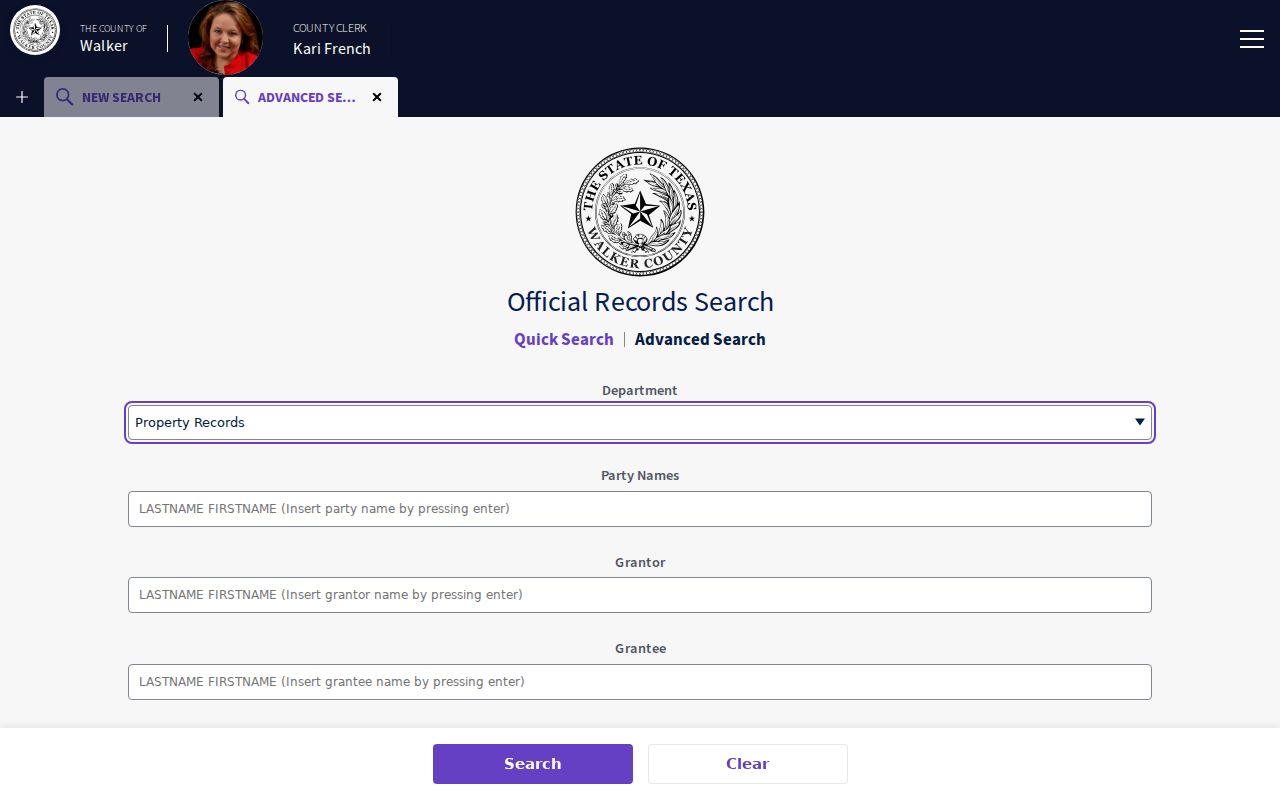
The advanced index view complements the parcel card by moving from an address lead to recorded instruments and named parties.
Huntsville Deed Names and Recorded Dates
Walker County Clerk advanced search turns a property lead into a dated document trail. Its visible fields include Party Names, Grantor, Grantee, recorded-date and instrument-date ranges, document number, book, volume, page, lot, block, legal description, and document-image phrase. Party fields expect LASTNAME FIRSTNAME and require the name to be added before searching. The quick search also offers grantor or grantee, subdivision, document type, document number, date range, and index-only or OCR options.
Search the current owner as a grantee to locate a purchase, then search the seller as an earlier grantee. When a deed has no useful street wording, retain the subdivision, lot and block, abstract, book and page, or full legal description. The current portal displayed a certified-through date in late August 2026 when inspected, but it did not publish a complete online start year. For old books, the Walker County microfilm guide is the proper fallback.
Note: Instrument date and recording date are separate facts, so keep both when building a Huntsville ownership timeline.
Huntsville Voter Records Have a Narrow Door
Texas My Voter Portal is designed for a voter’s own registration check. Its name route uses first name, last name, county, date of birth, and ZIP, while alternate routes use a VUID or qualifying Texas driver-license information. A matching record may show status, county, precinct, polling place, and district information. It is not a browseable Huntsville residents directory or a street-by-street voter roll. Protected addresses and identifiers remain restricted under Texas law.
The My Voter Portal is shown here as the state’s individual lookup path. Use it to verify a known registration, then contact the Walker County registrar for authorized election-record access rather than trying to infer a whole neighborhood from one result.
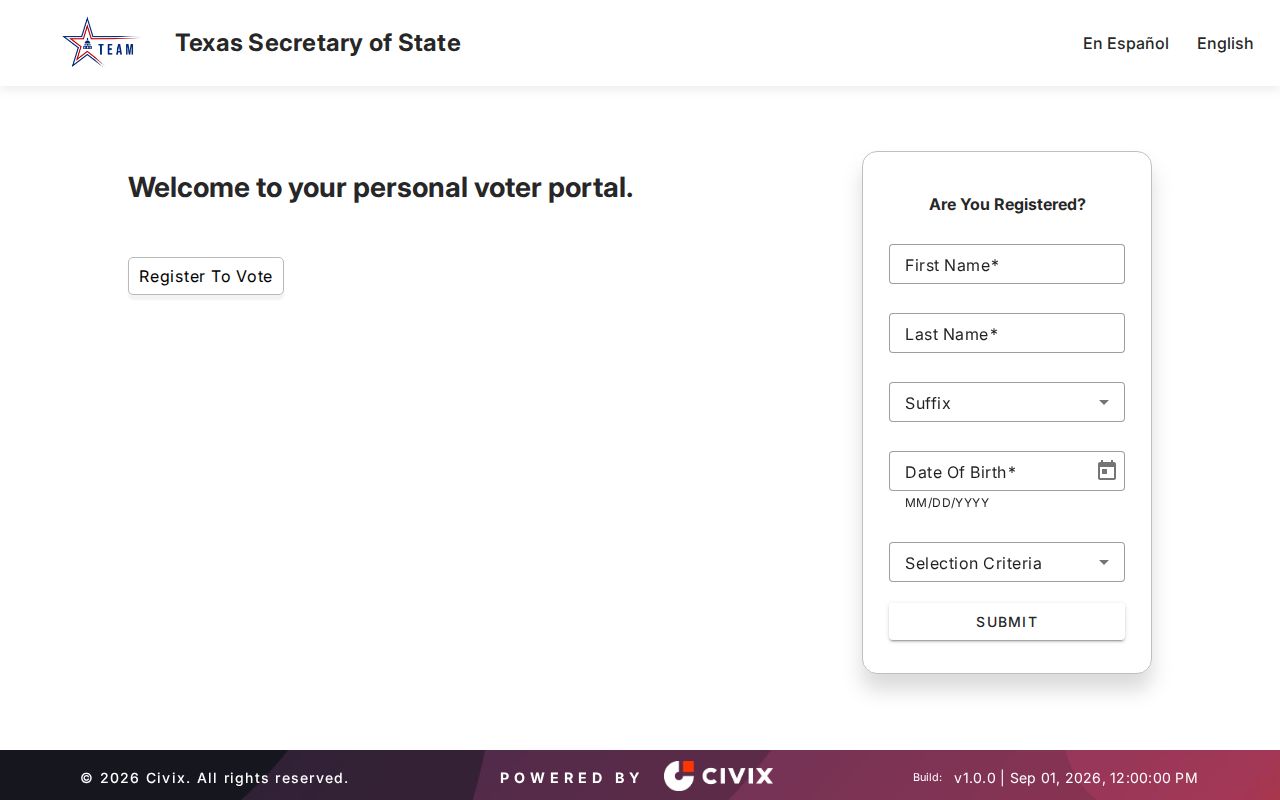
The portal image underscores that ZIP is an identity check within one voter’s search, not a filter for everyone in a postal area.
Huntsville Sources for Current Residents
Each current source answers a smaller question. CAD is a tax and ownership roll. The Clerk index names parties in recorded property and business documents. Courts identify cases, subject to sealed and confidential records. A voter self-check belongs to the voter, and a public organization directory identifies a group or business contact, not its members. The strongest Huntsville resident research uses the source whose date and purpose match the question.
| Source | Who It Lists | Keeper | Access |
|---|---|---|---|
| Walker CAD parcel roll | Taxable owners and parcel mailing/situs details | Walker CAD | Public property search |
| Official Records index | Grantors, grantees, and parties to recorded documents | Walker County Clerk | Public index; ask about images and copies |
| My Voter Portal | A voter’s own registration status and precinct | Texas Secretary of State | Individual self-lookup, not a roster |
| Municipal and county court records | Named case parties and dated case activity | City and county custodians | Portal or written request, with limits |
| Chamber and civic listings | Organization contacts and categories | Huntsville-Walker County Chamber | Public organization directory, not households |
For a name that needs careful confirmation, compare a parcel or recorded instrument with a second dated source. The Huntsville resident lookup page focuses on that one-person verification path rather than a general directory list.
Huntsville Court Names Need Confirmation
A court name search can supply a case number, style, filing date, court, or related document, but it does not resolve a same-name person by itself. Texas’s TAMES appellate search offers case and document tabs plus filters for court, style, county, date filed, trial case number, and attorney or bar number. re:SearchTX supports Cases, Filings, Text in Documents, and Hearings. Both are electronic research layers; the clerk remains the source for the official local file.
Texas court case search displays the statewide pathway. Huntsville Municipal Court is different: no public name docket was located in the official pages, so its route is a written request identifying the person and the precise citation, disposition, judgment, or other record requested.
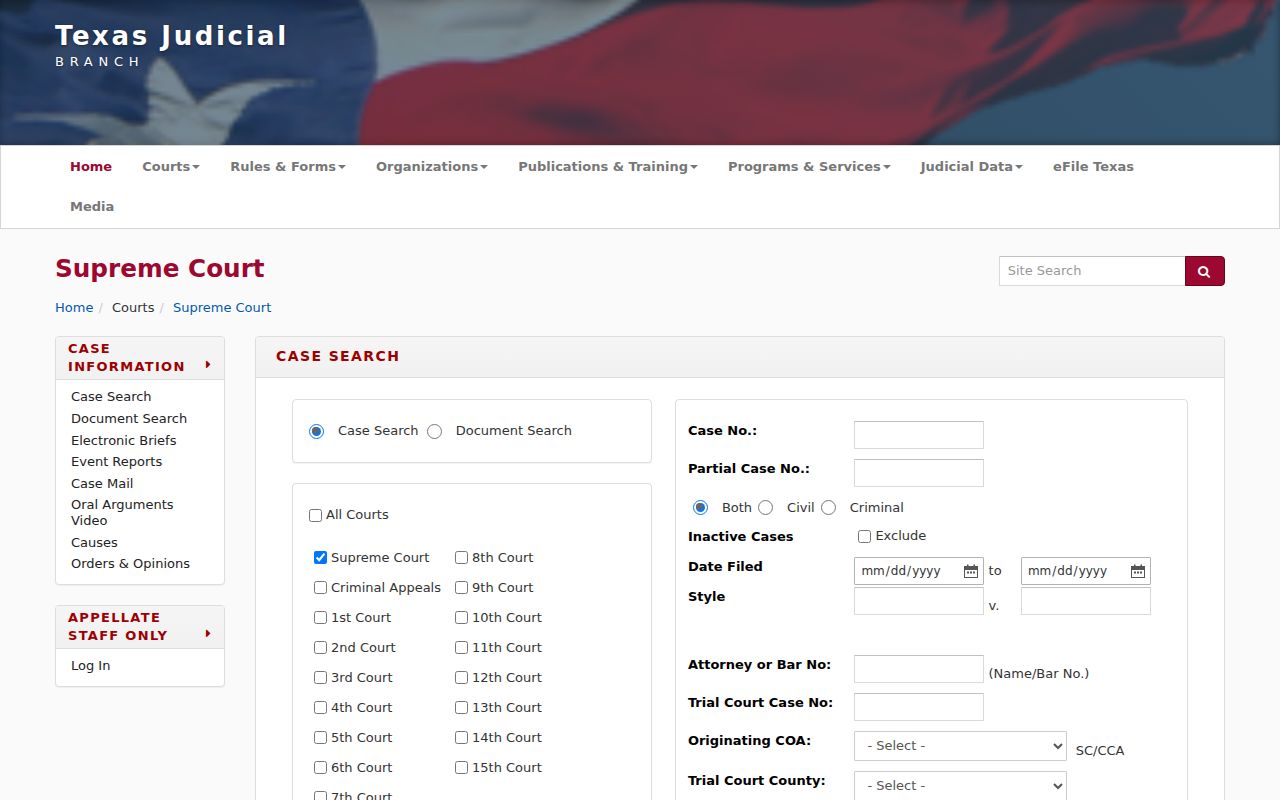
The court-search view is a starting point for a case clue; local clerks and custody rules decide whether a record can be released.
Huntsville Vital Indexes Open on Different Dates
Vital records can connect an older Huntsville name to a spouse, death, or county event, but Texas does not open every record at once. Under Texas Government Code §552.115, birth records become public after 75 years and death records after 25 years, with a one-year rule for an unidentified decedent. Texas DSHS maintains public marriage indexes from 1966 and divorce indexes from 1968. Those annual files are aids, not certified records, and can contain spelling or date errors.
Texas DSHS vital-record forms provide the state route for qualified requests. Before those statewide index years, or when a county event needs local context, the Walker County Clerk holds marriage and local vital material while the District Clerk handles divorce records. Recent certified copies remain limited to people who meet the stated access rules.
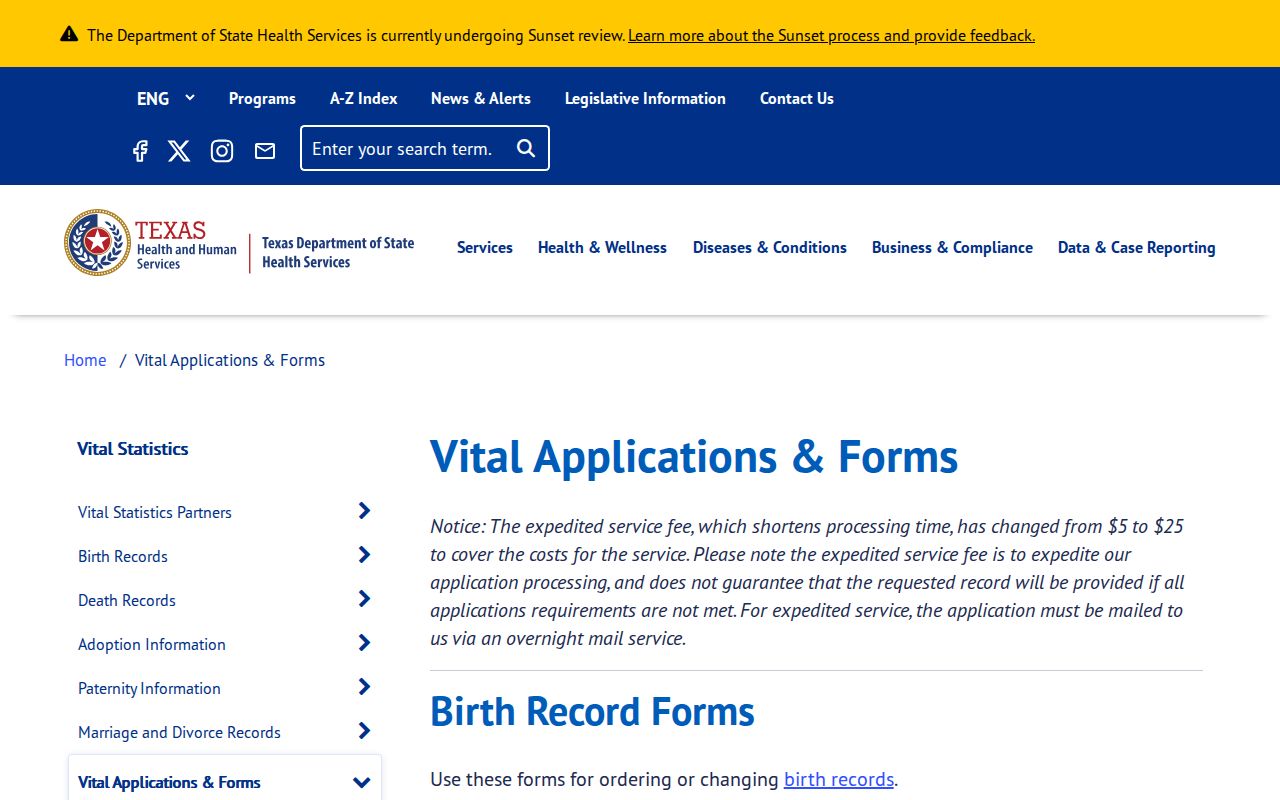
The form portal is useful for request preparation, but the opening period and requester eligibility determine what DSHS can issue.
Note: A marriage or divorce index confirms an event lead, while a certified copy or local court file serves a different legal purpose.
Huntsville Genealogy Room Has the Local Shelf
The Johnnie Jo Sowell Dickenson Genealogy Room at the Huntsville Public Library gives local research a useful offline route. The library reports more than 6,000 books, newspapers, microfilm, and computer-based resources, plus seven computers reserved for genealogy researchers. FamilySearch affiliate access, HeritageQuest, Ancestry Library Edition, American Ancestors, and Fold3 fill gaps around printed directories, census, military, and family-history sources. The room is a secure research space, with sign-in and keycard procedures and equipment for microfilm and scanning.
The library’s Genealogy Room information explains the local resources and research access. Walker County Genealogical Society material adds more than 5,000 bound volumes, 50,000 digital images, local birth, death, cemetery, marriage, and family-history material. Staff, volunteers, and archival shelves are the fallback when an online index gives only a partial trail.
The Walker County departments directory supplies the county office contacts needed when a Huntsville research lead moves beyond the library shelf.
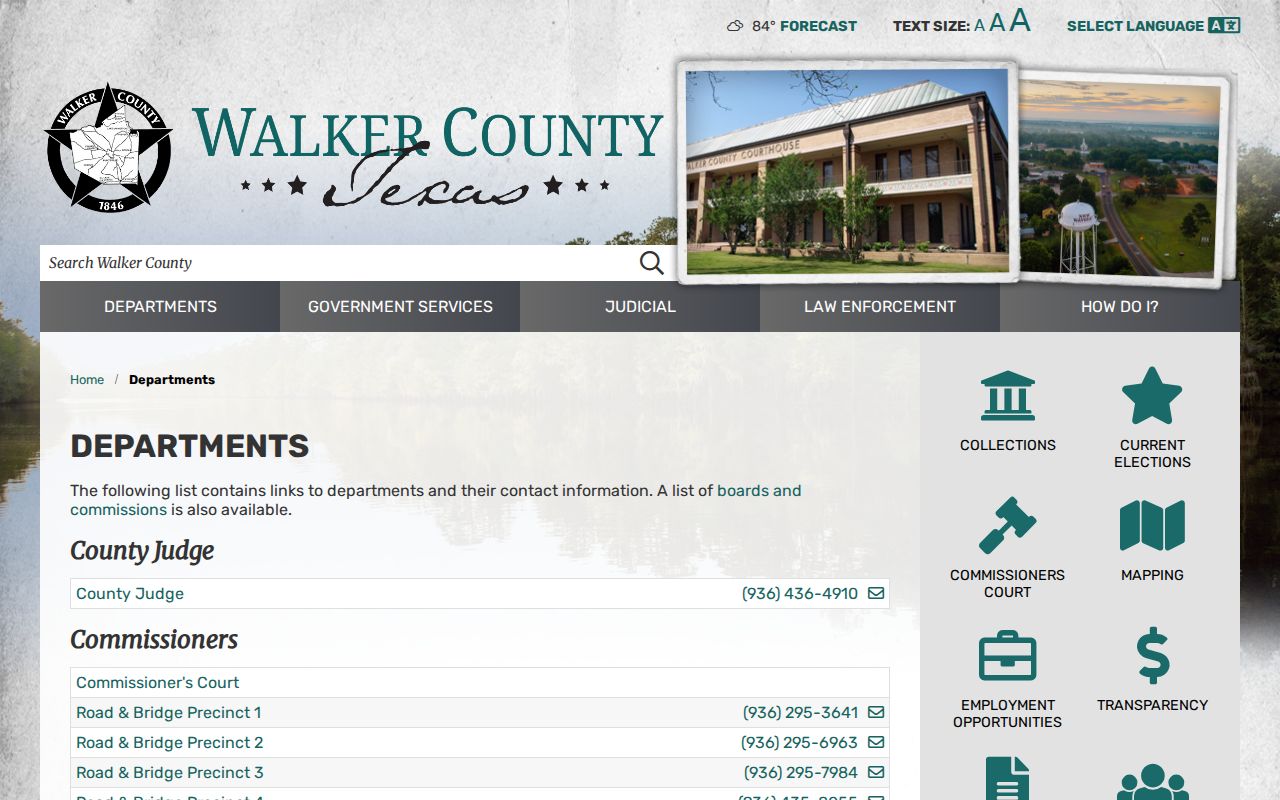
The county department directory helps separate a Clerk, elections, court, or jail question before an in-person or written request is sent.
Huntsville Resident Directories from Earlier Years
For historical Huntsville research, a directory is a dated snapshot, not a continuous census of an address. The Texas State Library and Archives Commission specifically lists Huntsville city-directory holdings for 1975 and 1990 in print or microform. The captured list does not name a publisher or prove a run between those dates. Older local coverage should be confirmed with the library, SHSU, FamilySearch, TSLAC, or the Texas directory collections before a searcher assumes an edition exists.
An alphabetical entry can carry a name, address, telephone number, spouse, and sometimes occupation or owner/renter notation. A reverse or criss-cross directory begins with an address and points to a listed subscriber or occupant, not automatically to the title owner. The fuller Huntsville city directories treatment explains how to read those distinctions and pair a volume with other dated evidence.
- Roll
- A list maintained for one purpose, such as tax assessment, voting, or a directory publication.
- Index
- A finding tool that points to records or names; it is not necessarily the underlying image or certified copy.
- Criss-cross directory
- An address-first directory that may identify a listed occupant or telephone subscriber at a point in time.
- Parcel
- A defined piece of taxable land, identified by a property or geographic key and a legal description.
Huntsville Microfilm Bridges the Portal Gap
The oldest Walker records are not only online. The Texas State Library guide identifies deed records from 1846 to 1886, marriage records from 1846 to 1916, probate minutes from 1846 to 1887, district civil minutes, naturalization material, tax rolls from 1846 to 1910, and scholastic census material. These reels connect a Huntsville household to county-seat records long before a web index or current street address existed.
One useful archival warning is the recorded absence of Deed Record Volume J. The run proceeds from Volume I to K because the historical record did not include J, not because a modern search missed a volume. Ask for the relevant reel or counter index and retain the exact volume, page, legal description, and date in research notes.
Note: The documented no-Volume-J gap is a Walker County filing quirk, not proof that an owner or parcel record disappeared.
Huntsville Business and Unclaimed-Property Leads
Some named leads sit outside the property roll. Walker County’s official-records advanced search includes an Assumed Names department, while Texas SOSDirect provides entity, UCC, and copy services for a $1 statutory search fee. A filing can connect an entity, registered agent, or business address, but it is not proof that a person lives at that address. Sensitive information is redacted from state filings.
ClaimItTexas can also surface an older name or address lead through a free search by name, city, property ID, or ZIP. Its results should be treated as a dated financial-property clue, not a current-residency finding.
The SOSDirect entry page provides the state-level business and UCC search route used to test a Huntsville business connection.
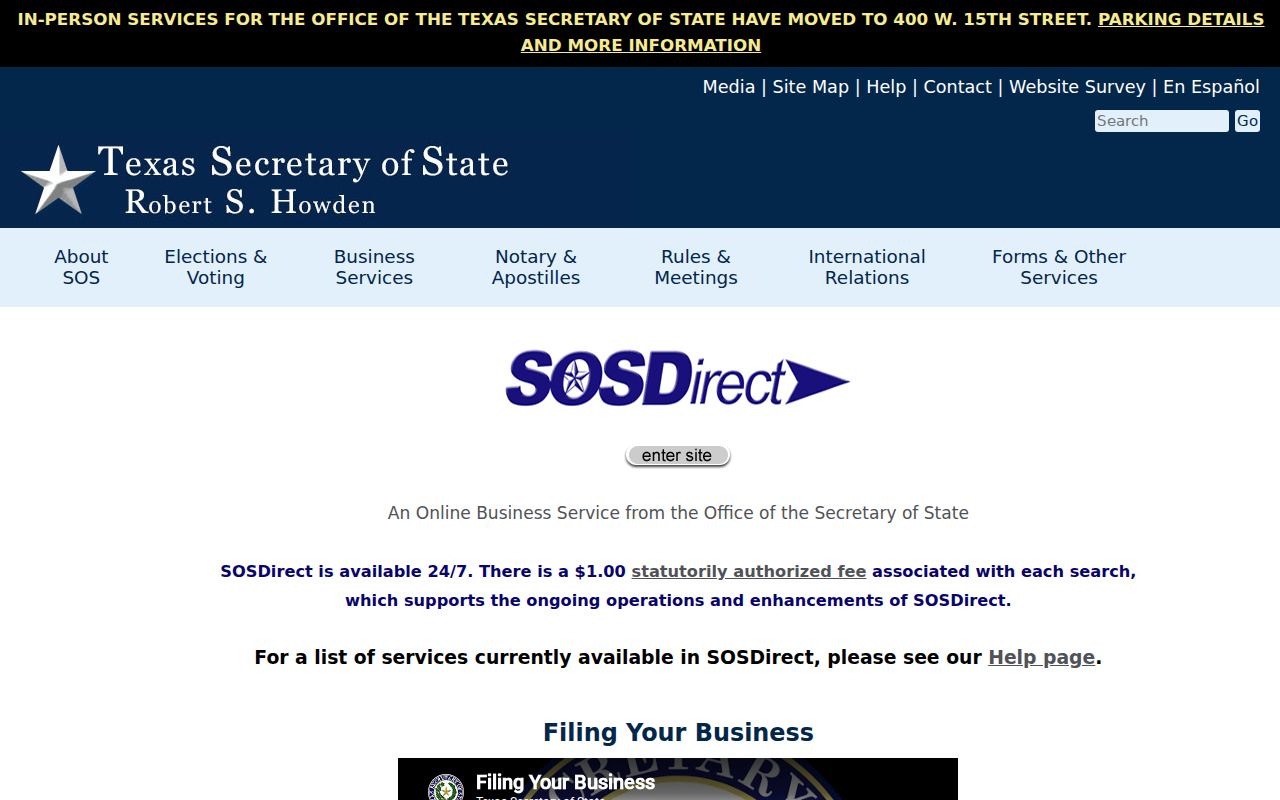
The SOSDirect image reinforces the distinction between a filing address and evidence of a private household.
The ClaimItTexas search is the official source represented in the next image.
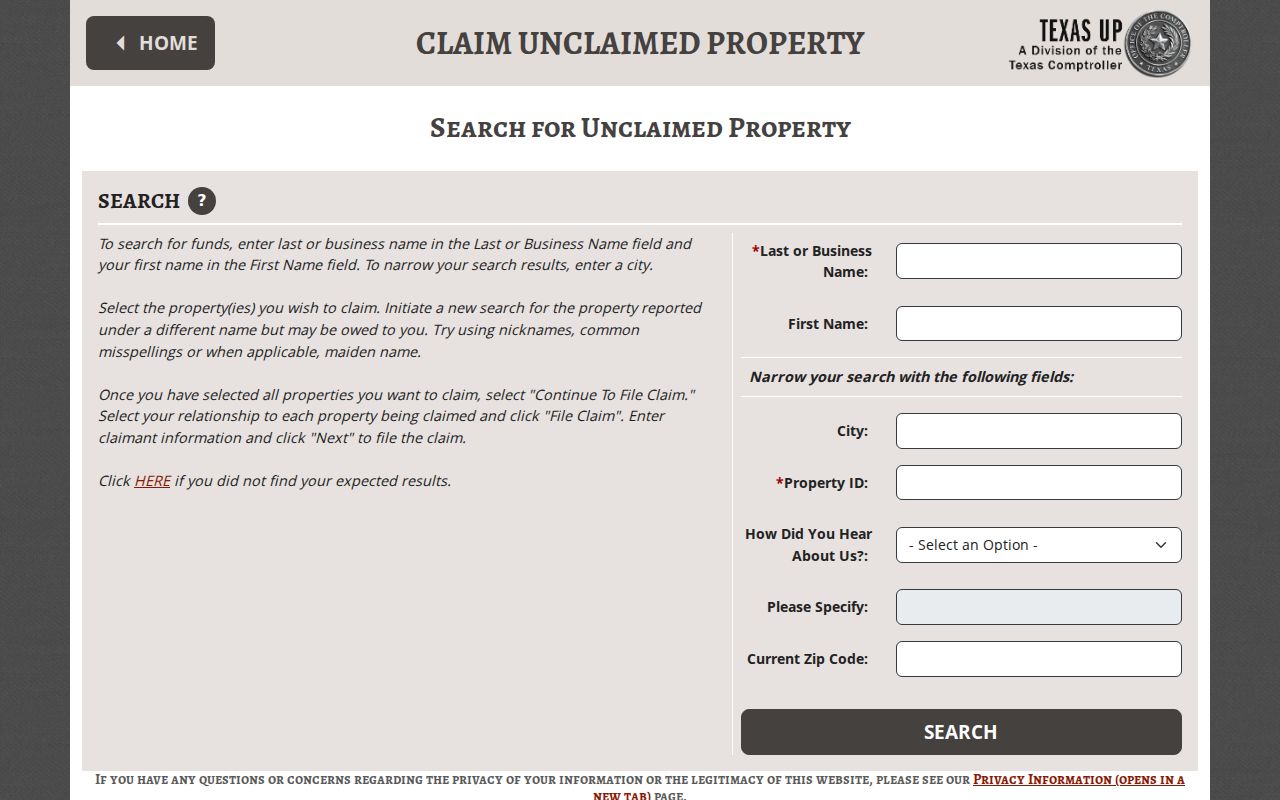
The state search screen is useful for checking a name variant, especially where a later official record can verify the connection.
Huntsville Records Can Stay Protected
Texas keeps important limits around resident information. Driver-license and motor-vehicle data are restricted under the federal DPPA. Some court cases are sealed, expunged, or confidential. Voter registration data has statutory confidentiality rules, and survivors who qualify for the Texas Address Confidentiality Program may use a substitute address. Public records are valuable for personal, lawful research, but a missing name can reflect a protection rather than a gap in a person’s history.
Lawful use. Use Huntsville resident information for personal, civic, family-history, or property research. Do not use records to stalk, harass, threaten, or harm anyone; Texas law prohibits that conduct.
The Texas Address Confidentiality Program describes the substitute-address service and eligibility for qualified survivors. The source custodian, rather than an index, is the place to ask about a correction or protected access rule.
Huntsville Requests Reach the Right Custodian
When a needed record has no search box, ask the office that holds it. Huntsville city records generally route through the City Secretary by designated mail, hand delivery, email, or the city’s JustFOIA portal. Police records have a separate channel. Municipal Court takes a written request with identifying details and says to allow 7 to 10 business days. Development Services can be contacted for existing permit, code, planning, or inspection records tied to an address.
Huntsville’s public-information request page shows the city channels. The Texas Public Information Act, Texas Government Code chapter 552, requires a governmental body to promptly produce responsive existing records or explain a longer time. Give a narrow date range and record description, then preserve the response from the custodian.
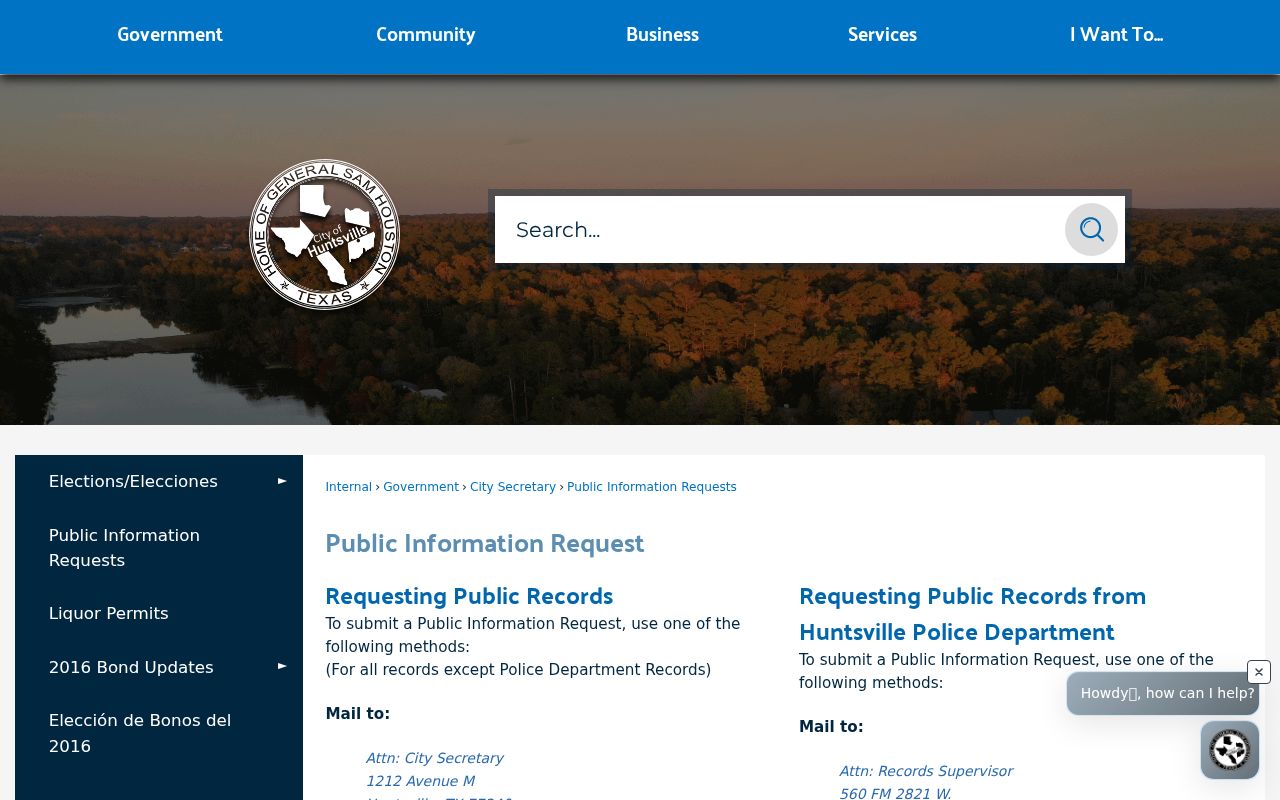
The city request page is the practical next step for an address-based record that the public web pages do not index.
Huntsville Search Results Need Three Clues
Same-name mistakes are common in a county-seat community with university, state, city, and county records. A careful result matches at least three details when possible: a full name or variant, a dated address or legal parcel, and another point such as a spouse, approximate age, owner ID, case number, business affiliation, or directory year. A parcel owner, a grantor, and an organization officer may be different people with similar names.
Official sources can disagree because their purposes differ. CAD records taxable ownership. A deed records a transaction. A directory is a dated listing. Court and vital records have access limits. Keep the source and date beside each fact, then ask the custodian to correct an apparent error in its own record rather than copying the error into the next search.